« Online Casino Demo Mode: What You Can—and Can’t—Learn Before Playing


A reader accustomed to six-number lotteries can misread Lotofácil before checking a single value. Its basic selection uses 15 numbers from a field of 25. That larger selected share changes the appearance of a normal line: many adjacent numbers and dense clusters are unsurprising because most of the available field is represented.
A lotofácil number generator should begin by explaining that format. For the basic selection, it needs 15 distinct values from 1 to 25. If it offers a larger permitted selection, the output should identify that size explicitly rather than making it look like an ordinary basic line with a few harmless additions.
With 15 values in a 25-number field, a selection will necessarily leave just ten values unselected. A row containing several consecutive values is not suspicious on that basis alone. The selected set occupies a large fraction of the field, so assumptions imported from a sparse six-number line can be misleading.
A first review is mechanical: count the values, check the minimum and maximum permitted values and confirm uniqueness. Do not count a repeated value twice because it appears in two positions. A generator that uses independent random values and simply removes duplicates can leave a short selection unless it continues until the required count is reached.
For a basic line, listing the 15 selected values and listing the ten omitted values are two ways to identify the same selection. Once the full 25-number field is known, either list determines the other. This can be useful when checking an exported line for a missing value or accidental duplication.
The complementary view does not create another entry or provide a prediction method. A preference for certain omitted numbers is still a preference for the corresponding selected set. Renaming the task from choosing 15 to excluding ten changes how a person thinks about it, while leaving the underlying complete combination unchanged.
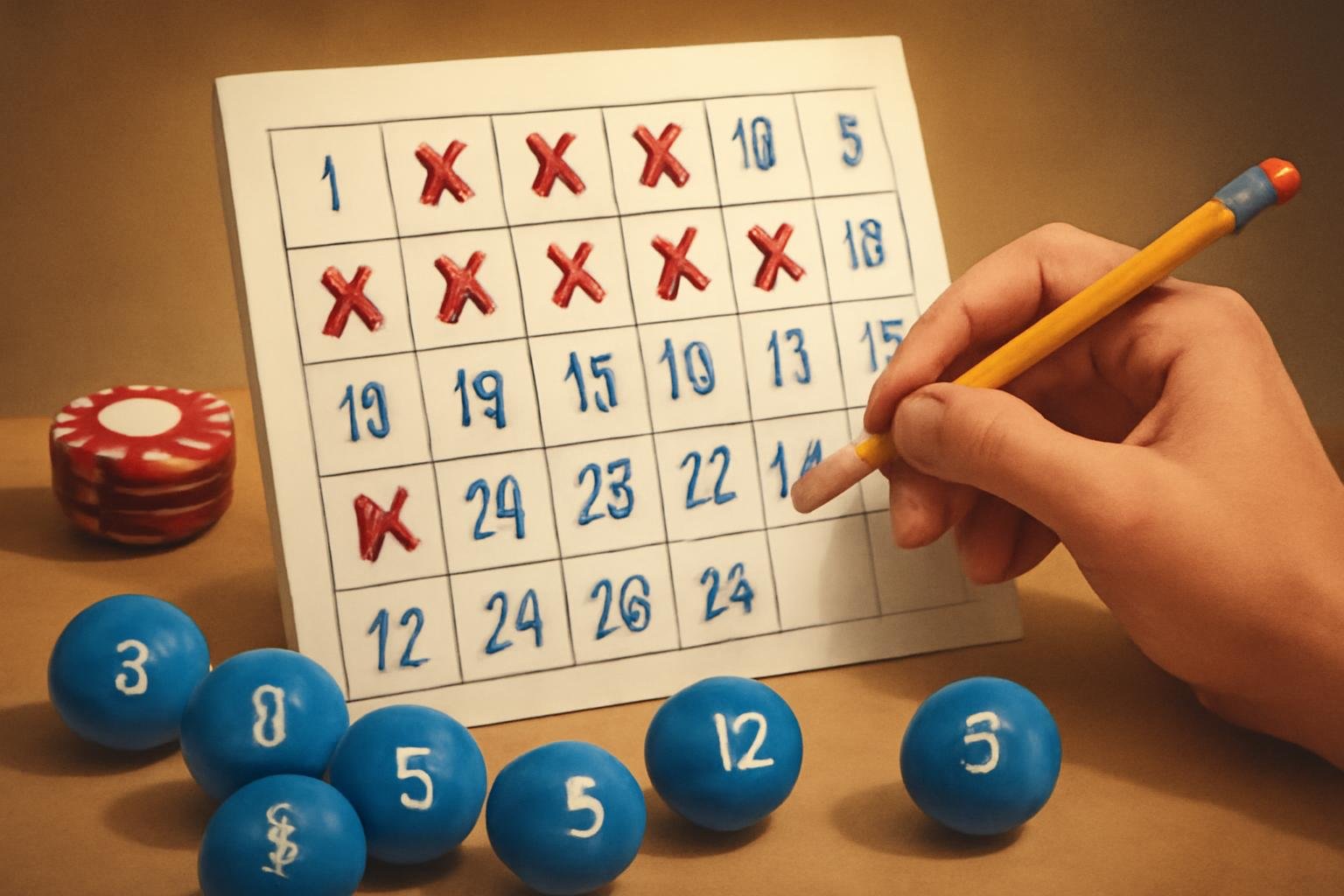
Lotofácil values are often shown in a compact grid. Rows, columns and visual shapes can make manual checking convenient, but those shapes depend on the layout chosen by the display. The lottery selection is the set of numeric values. A different screen arrangement could make exactly the same set look very different.
If a tool offers row or column filters, it should describe them as constraints on its examples. Such filters exclude some otherwise valid combinations. They do not establish that the retained combinations have a stronger individual chance in a fair draw. A visually satisfying grid should not be confused with evidence of predictive accuracy.
A permitted selection containing more than 15 values represents multiple 15-number subsets. Selecting 16 values, for instance, contains 16 different basic subsets. That relationship explains why a larger visible set changes the entry structure rather than merely adding a decorative number to the same basic line.
Before interpreting a generator's larger-set output, identify whether it represents an official multiple selection, a pool of candidate values or a lesson about combinations. These uses require different explanations. Current accepted selection sizes and pricing belong to the operator's rules, and the tool should direct readers to verify those conditions before an entry decision.
An exported selection should retain the game name, selected count and every value. If a grid is converted to plain text, make sure the ordering or line breaks do not hide omissions. Sorting the numeric values is often helpful, provided the complete set is preserved and no duplicate is silently dropped without replacement.
When several examples are saved, compare their complete sorted sets to identify repeats. Two different-looking grids can represent identical selections. Conversely, two sets differing by only one selected value are different complete combinations, even though most of their values overlap. A record should reflect both facts rather than relying on visual similarity.
A generated example does not establish an accepted purchase, draw date or prize eligibility. Those facts come from the authorized entry record. Historical results can help a reader learn how matches are counted, but they do not make a particular omitted or selected number due in an independent future draw.
The useful result is a complete, correctly labelled Lotofácil selection that can be checked without guessing how the display works. Understanding the 15-from-25 structure, the ten-value complement and the meaning of larger sets gives the generator a clear educational purpose. None of those conveniences changes the probability of a particular valid basic combination.
 Exploring 365CUCI: A Full-Service Online Casino Platform for Malaysian Gamers
 How to win Casino Poker tournaments Like A Pro
 Is Poker A Luck-Based Or Skill-Based Casino Game? — Updated 2026
 Why Sportsbetting through Online Bookmakers is the Optimum Option a Bettor Can Have? — Updated 2026


